
How I Built Nuelink's Free Tools Engine: 974,000 Clicks, 44,2M Impressions, a DMCA Takedown, and a Conversion Layer That Turned Traffic into Signups
The Idea
Free tools are one of the most underleveraged assets in SaaS SEO. The logic is simple: build tools that your target users are already searching for, give them away for free, and let the product sell itself to the people already doing the work.
The question isn't whether to build them. It's how to build them at scale, make sure the right people find them, and then actually convert that traffic into users.
That's what this case study is about.
The Architecture
The first question wasn't how to build the tools. It was which tools were worth building at all. Free tools can bring a massive number of clicks and visitors but if the free tools are not specifically designed for your ICP all of these clicks won’t help you with nothing.
The selection process drew from three sources. Competitor analysis showed which tools were already driving traffic for other players in the social media space. User requests flagged what Nuelink's existing audience was actually asking for. And a broader market analysis surfaced gaps
The filter was simpler: would this tool genuinely be useful to Nuelink's ICP? If yes, it was worth building and ranking on.
The focus started with tools a social media manager or content creator would use daily. Caption generators, hashtag generators, comment generators…. Things someone would search for, use, and immediately recognize as connected to what Nuelink does.
The platform Duplication Logic
If an Instagram Hashtag Generator had search demand, so did a LinkedIn Hashtag Generator, a TikTok Hashtag Generator, and a Pinterest Hashtag Generator. Same tool type. Different keywords. Different enough user intent to justify its own dedicated page.
Instead of one generic hashtag tool, every tool type could be multiplied across every platform Nuelink supports. One idea becomes eleven pages, each targeting its own specific query.
To execute this without rebuilding every tool from scratch, a dynamic page architecture was implemented together with the dev team. One template, rendered per platform. Fast to scale and also easy to maintain.
The coverage rule was simple: if Nuelink supports a platform, that platform gets its own version of every applicable tool.
The full 130+ tool library was built over the course of a year, in waves, always starting with what mattered most to the audience Nuelink was trying to reach.
The Results
The tools pages alone generated:
- 974,000organic clicks
- 44.2 millionimpressions
- 2.2%average CTR
- 12.5average position
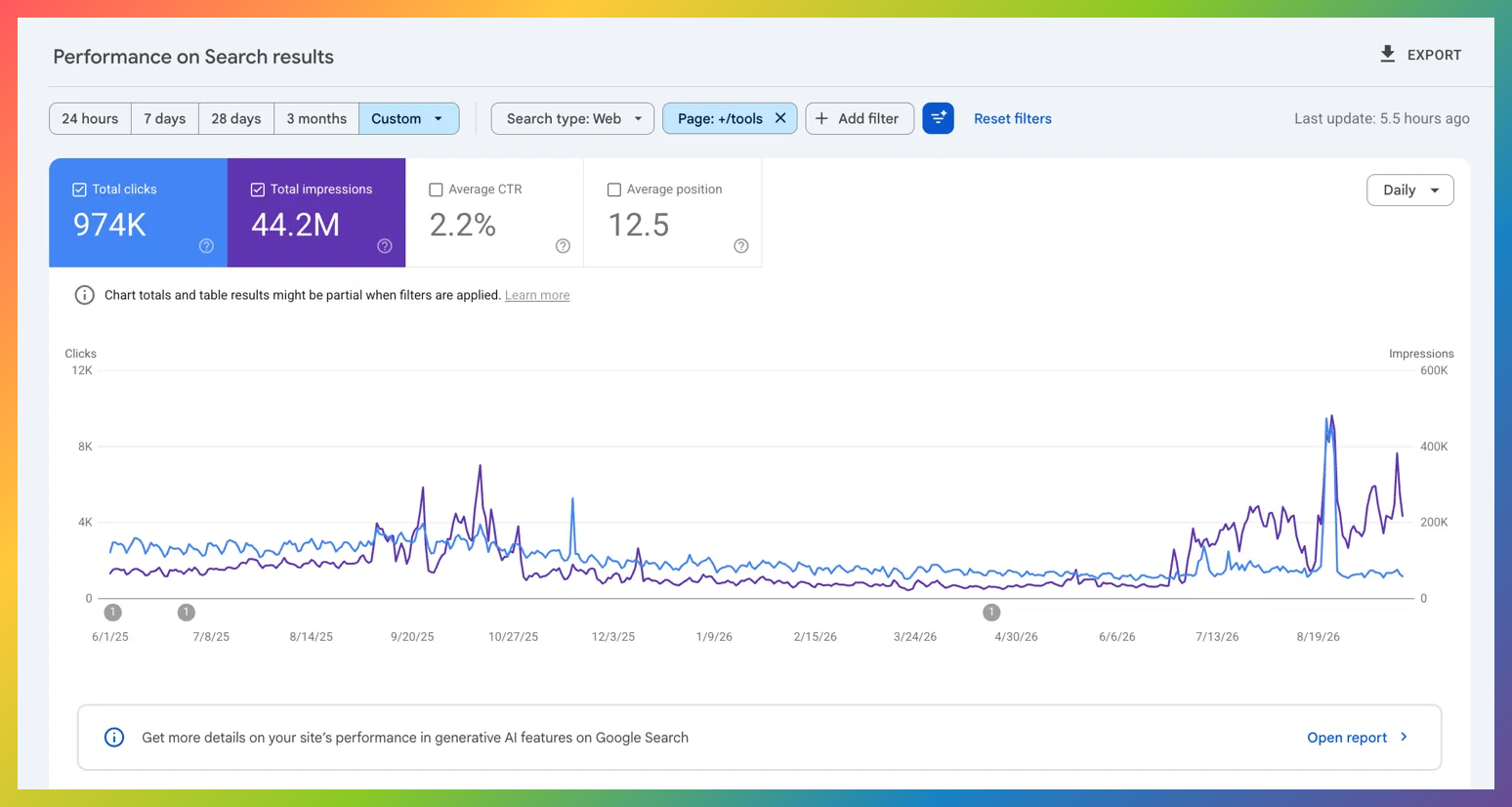
Standout Wins (Rankings, Clicks, and Impressions)
These are not the only tools performing. They are five examples that show what the platform-by-platform architecture looks like when it works.
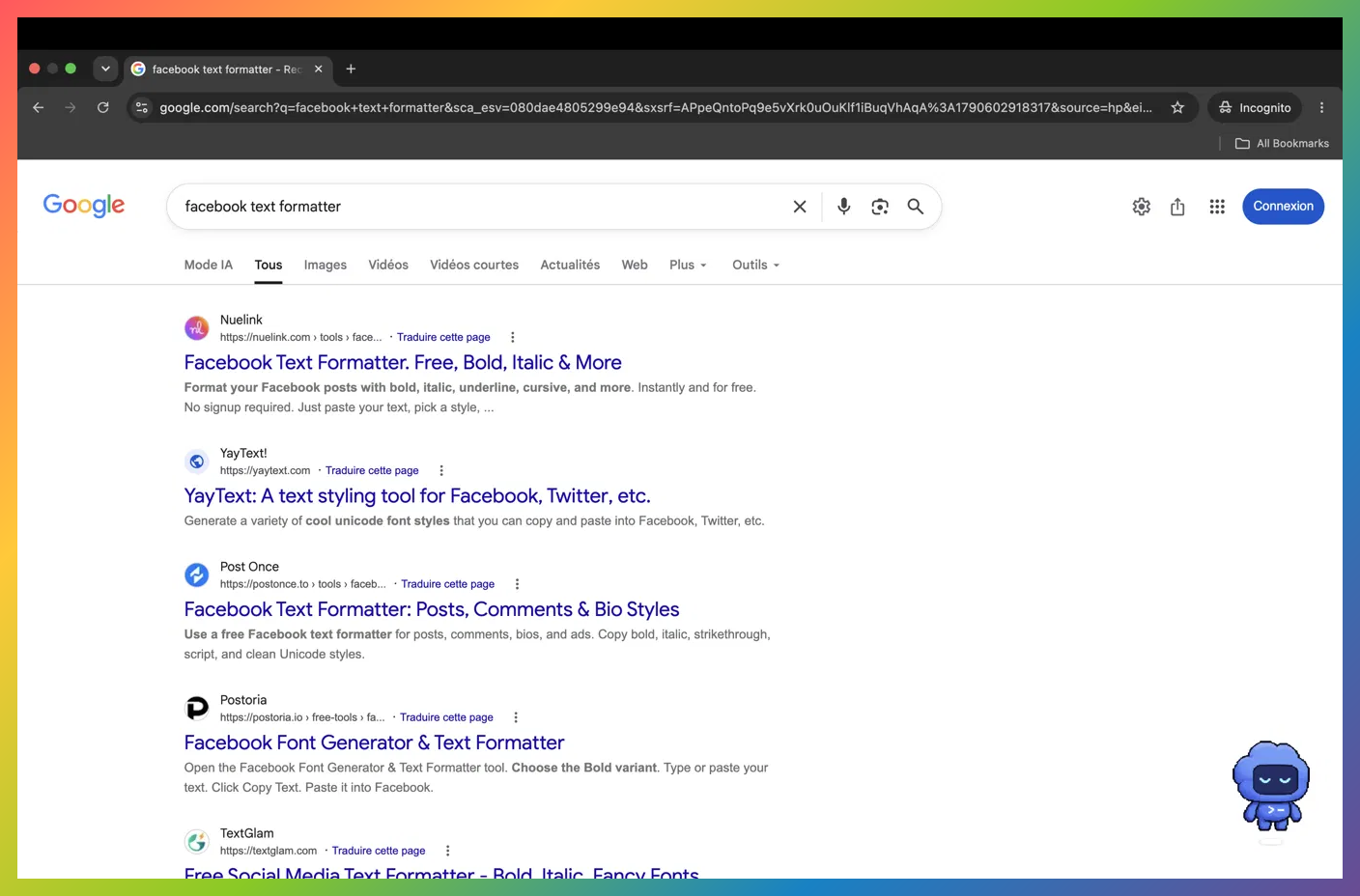
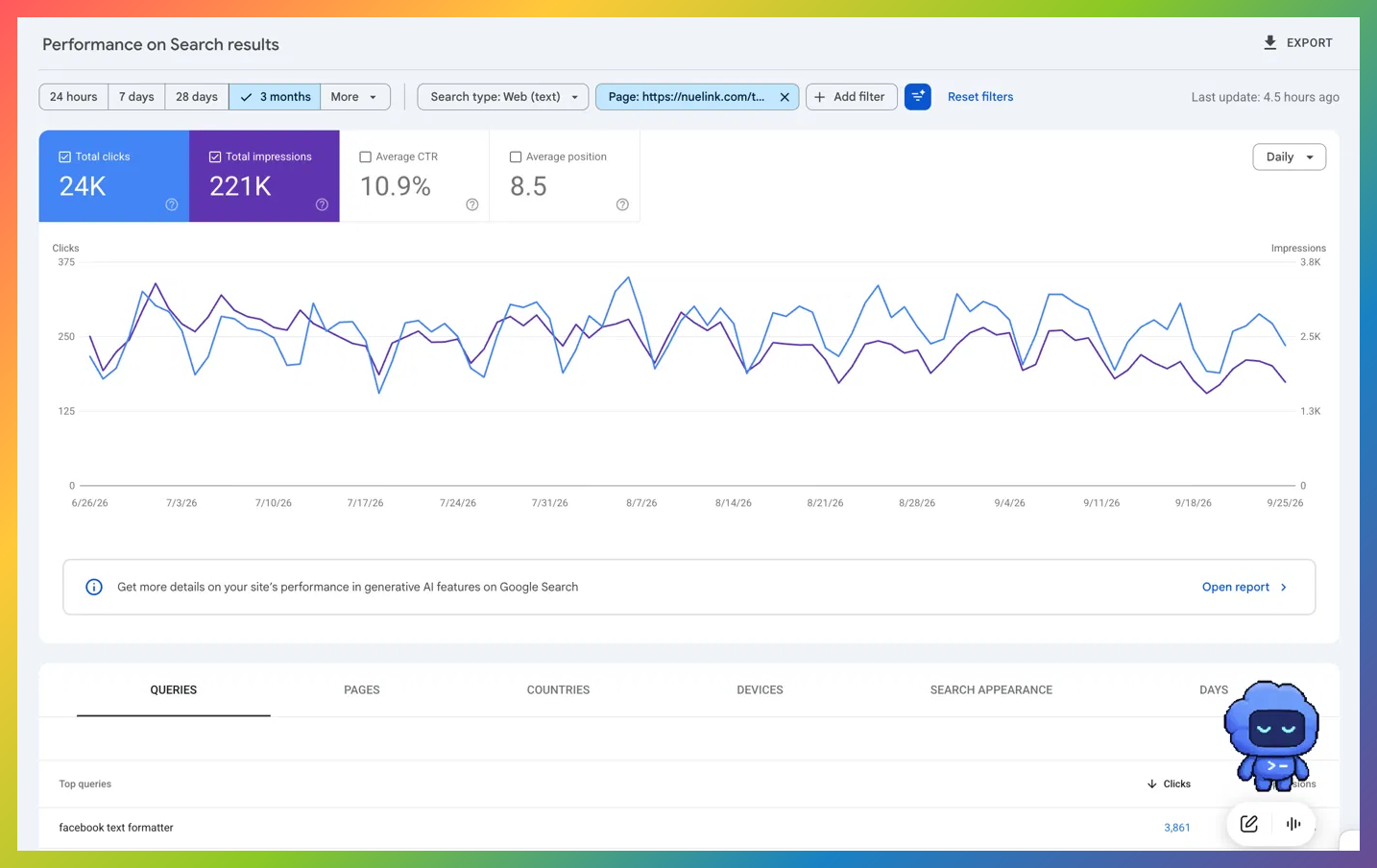
Facebook Text Formatter
Keyword: "facebook text formatter"
Position #1 on Google
24,000 clicks and 221,000 impressions in 3 months. CTR of 10.9% at an average position of 8.5. Ranking above tools that exist solely for this purpose.
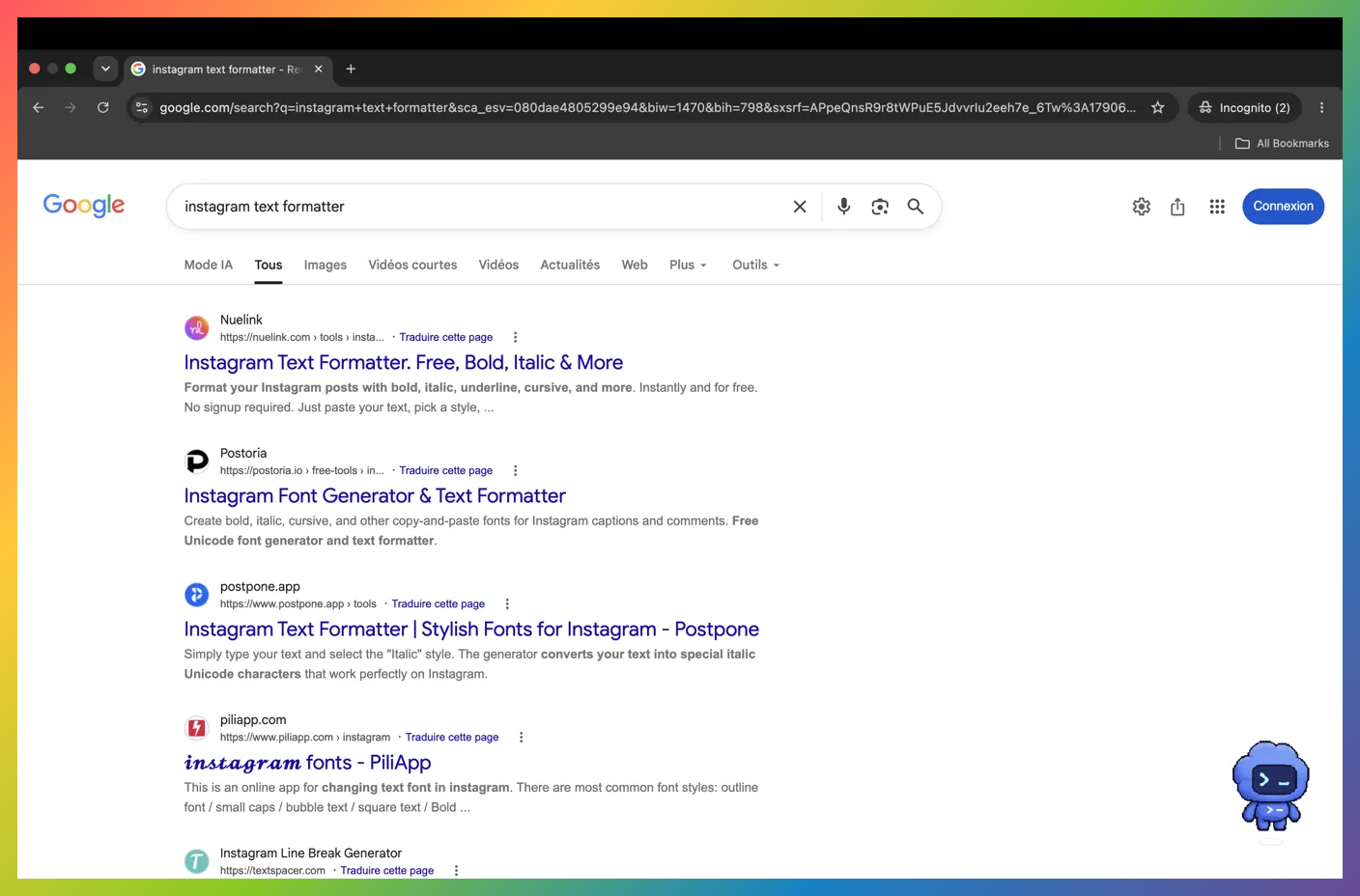
Instagram Text Formatter
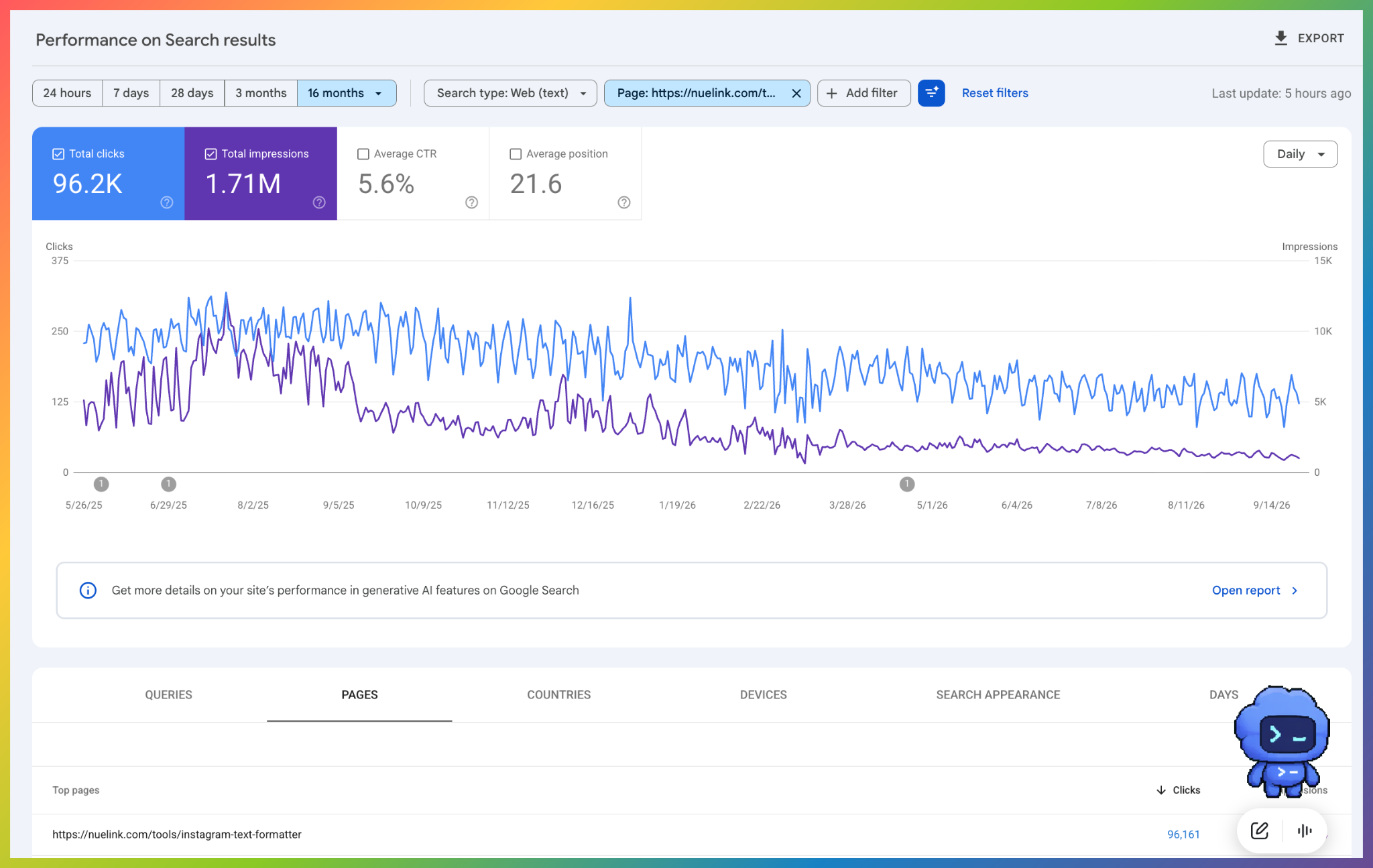
Keyword: "instagram text formatter"
Position #1 on Google
96,200 clicks and 1.71 million impressions over 16 months. This is the single highest-traffic tool page in the architecture and a direct result of the platform duplication logic. Build it once for Facebook, replicate it for Instagram, and you have two #1 rankings instead of one.
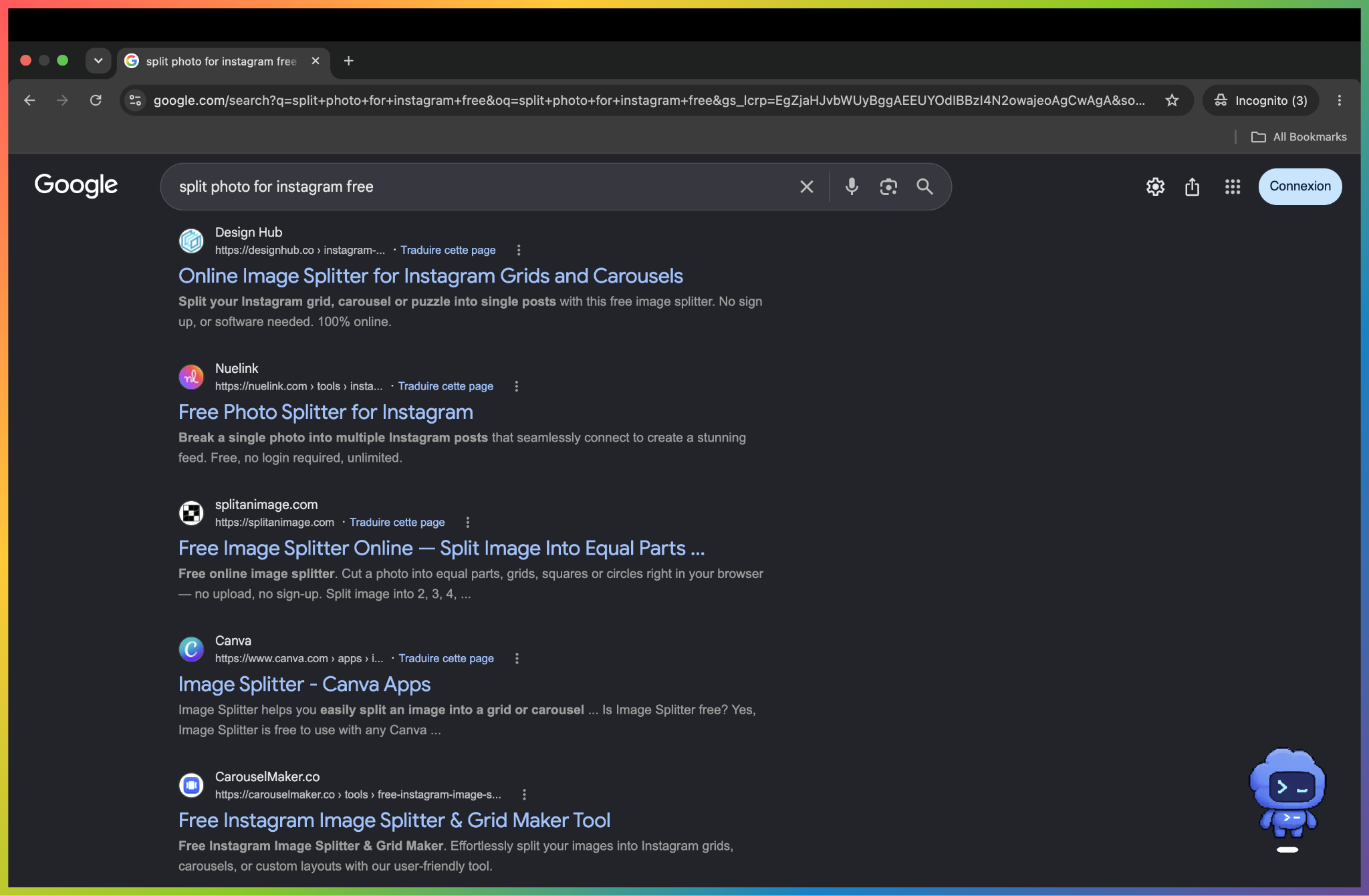
Instagram Photo Splitter
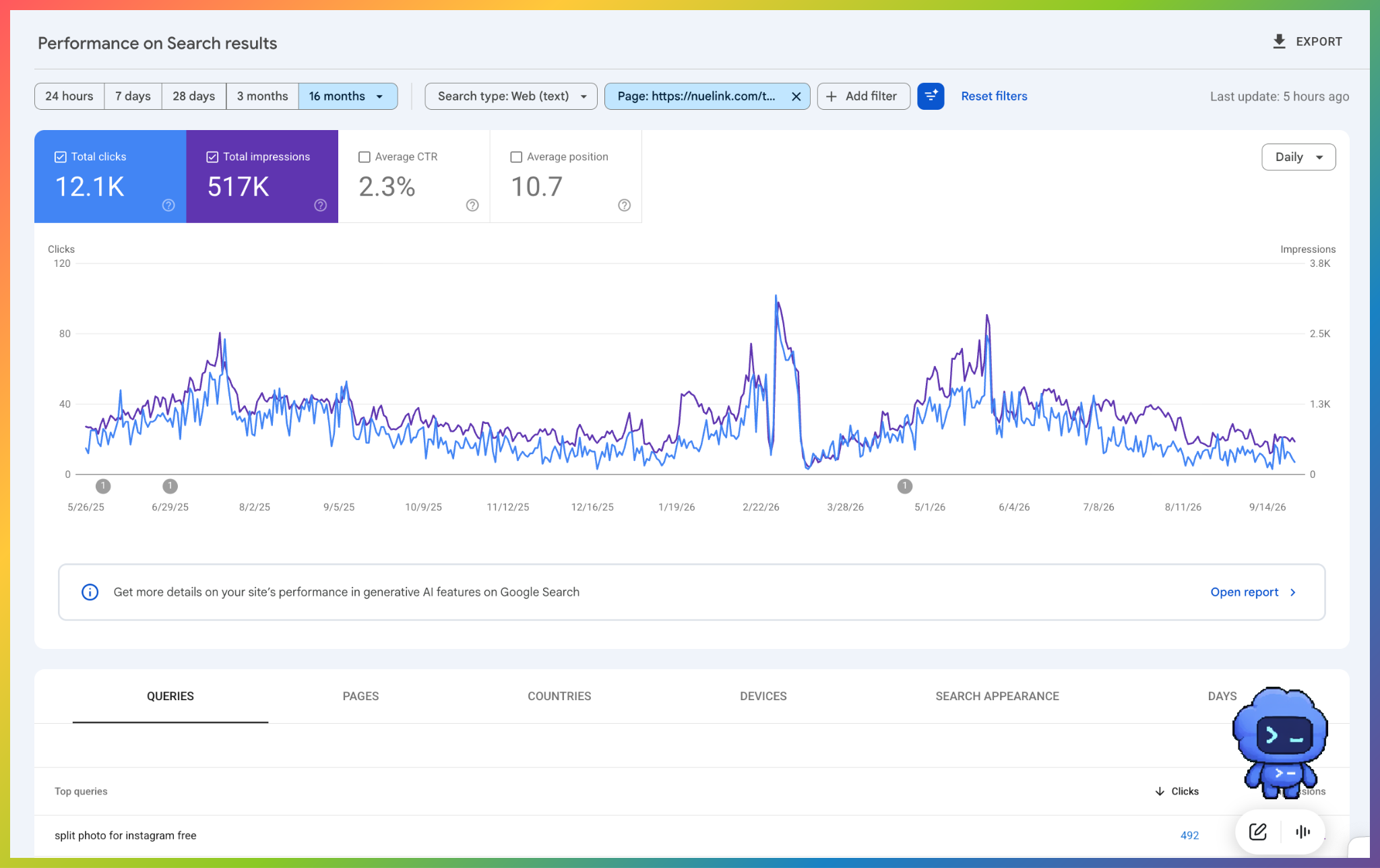
Keyword: "split photo for instagram free"
Position #2 on Google
12,100 clicks and 517,000 impressions over 16 months. Ranking behind a site built specifically for this feature, beating Canva and every other scheduling tool in the space.
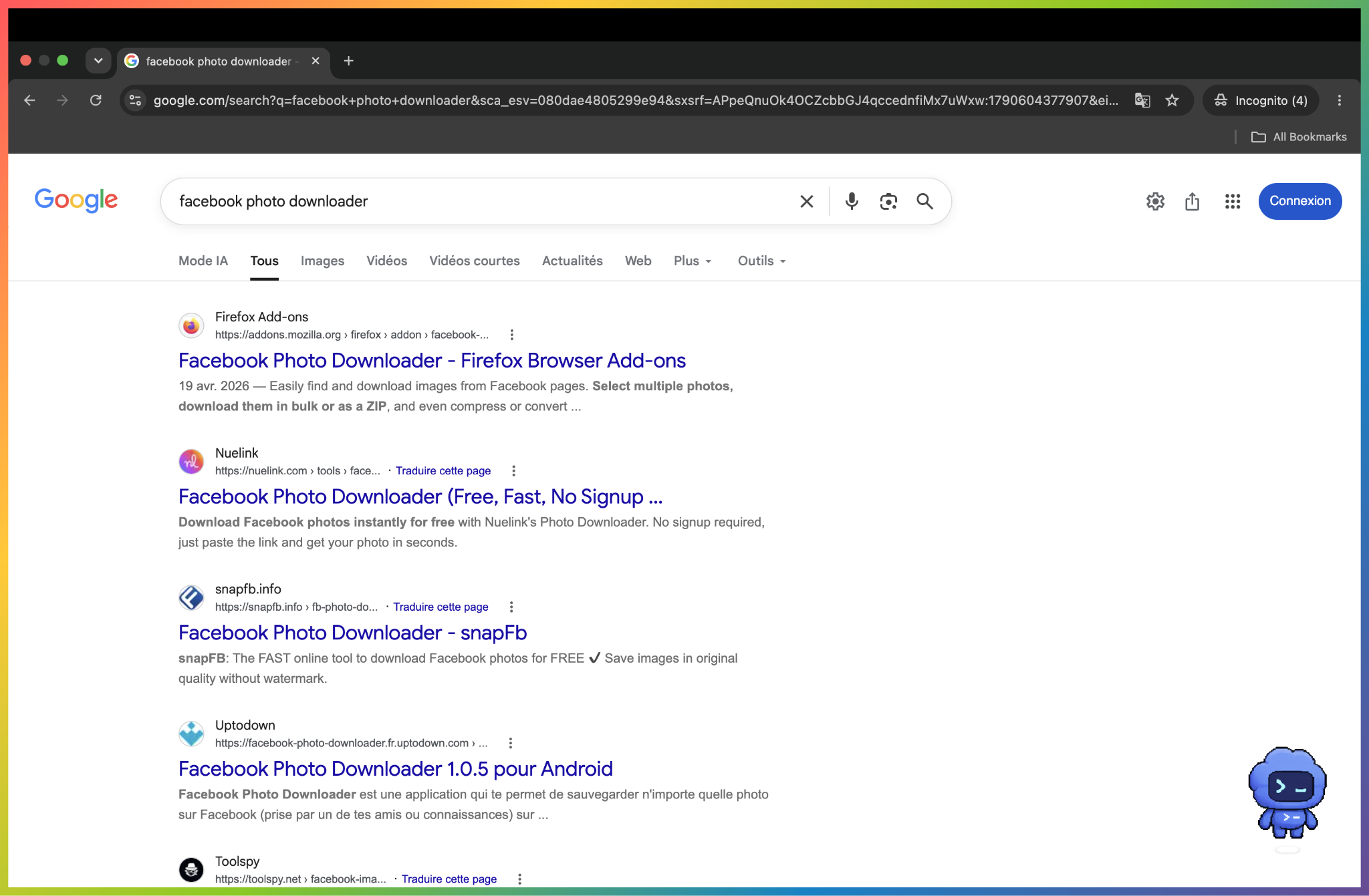
Facebook Photo Downloader
Keyword: "facebook photo downloader"
Position #2 on Google
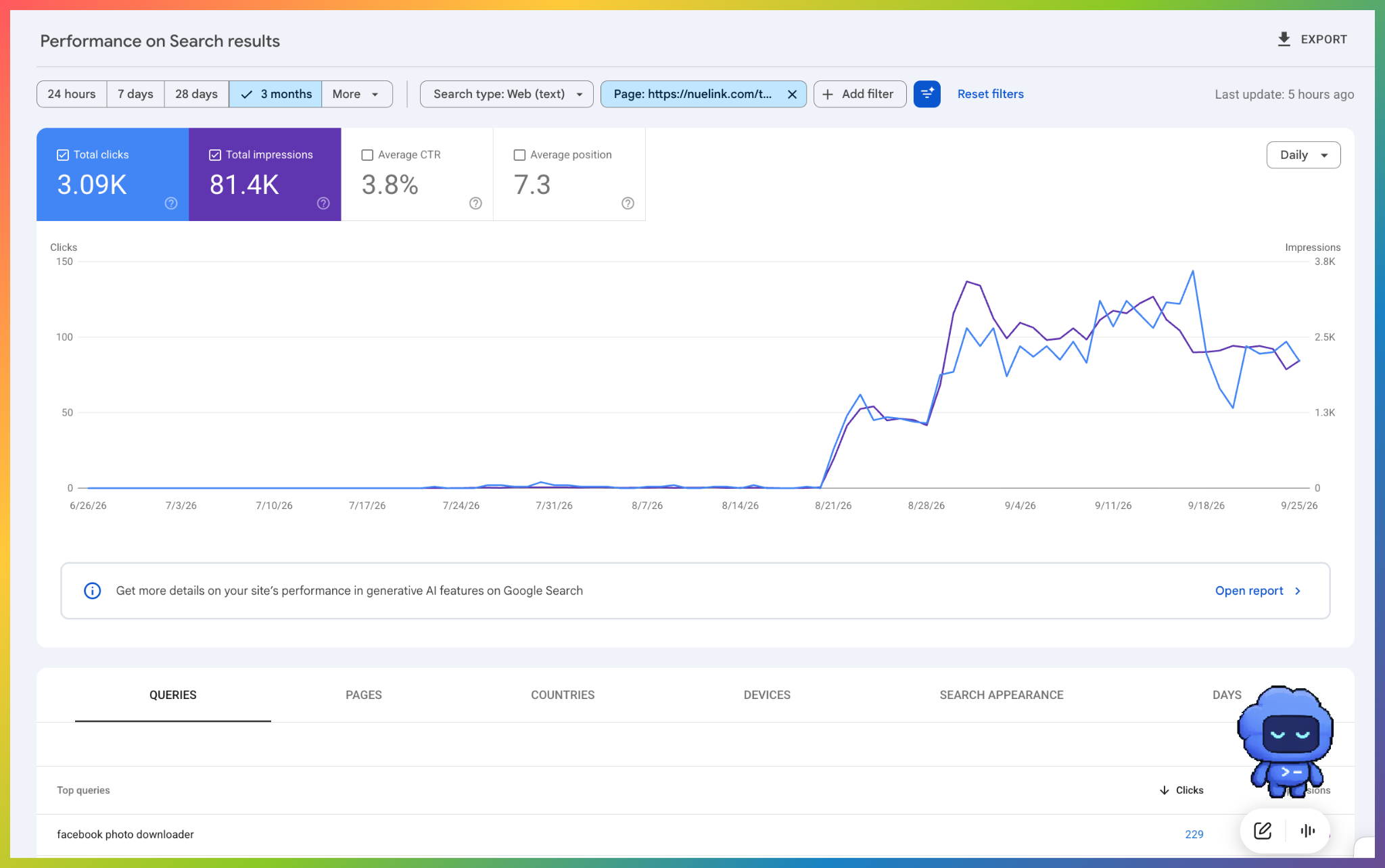
3,090 clicks and 81,400 impressions in 3 months.
Keeping the Tools Alive (Slack Sentry)
Building 130+ tools creates a different kind of problem which any one of them can break at any time.
A downloader fails because a platform changes its API. An AI tool times out under load. A formatter returns an error. If that happens silently, Nuelink is ranking on Google for a tool that doesn't work, which is worse than not ranking at all.
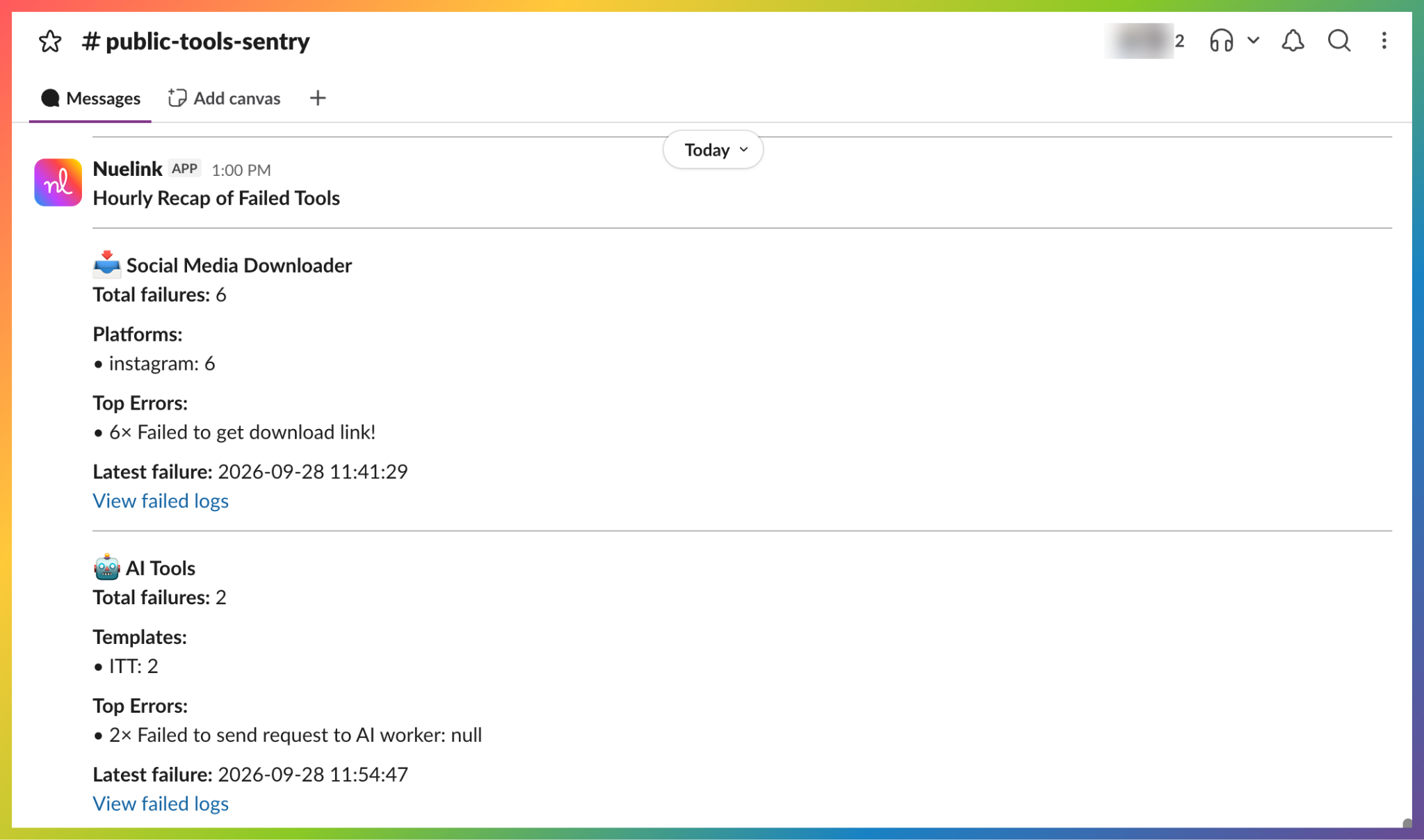
To catch this early, I worked with the dev team to set up a Sentry monitoring system connected directly to Slack.
Every hour, an automated recap surfaces any tool failures, the specific error, the platform affected, and the exact timestamp. The moment something breaks, the team knows which tool, what went wrong, and can move to fix it immediately.
It's a small system with a big implication: the traffic this architecture generates only has value if the tools actually work when people arrive.
The Conversion Layer
Ranking for 130+ tools means nothing if visitors leave without converting into potential users.
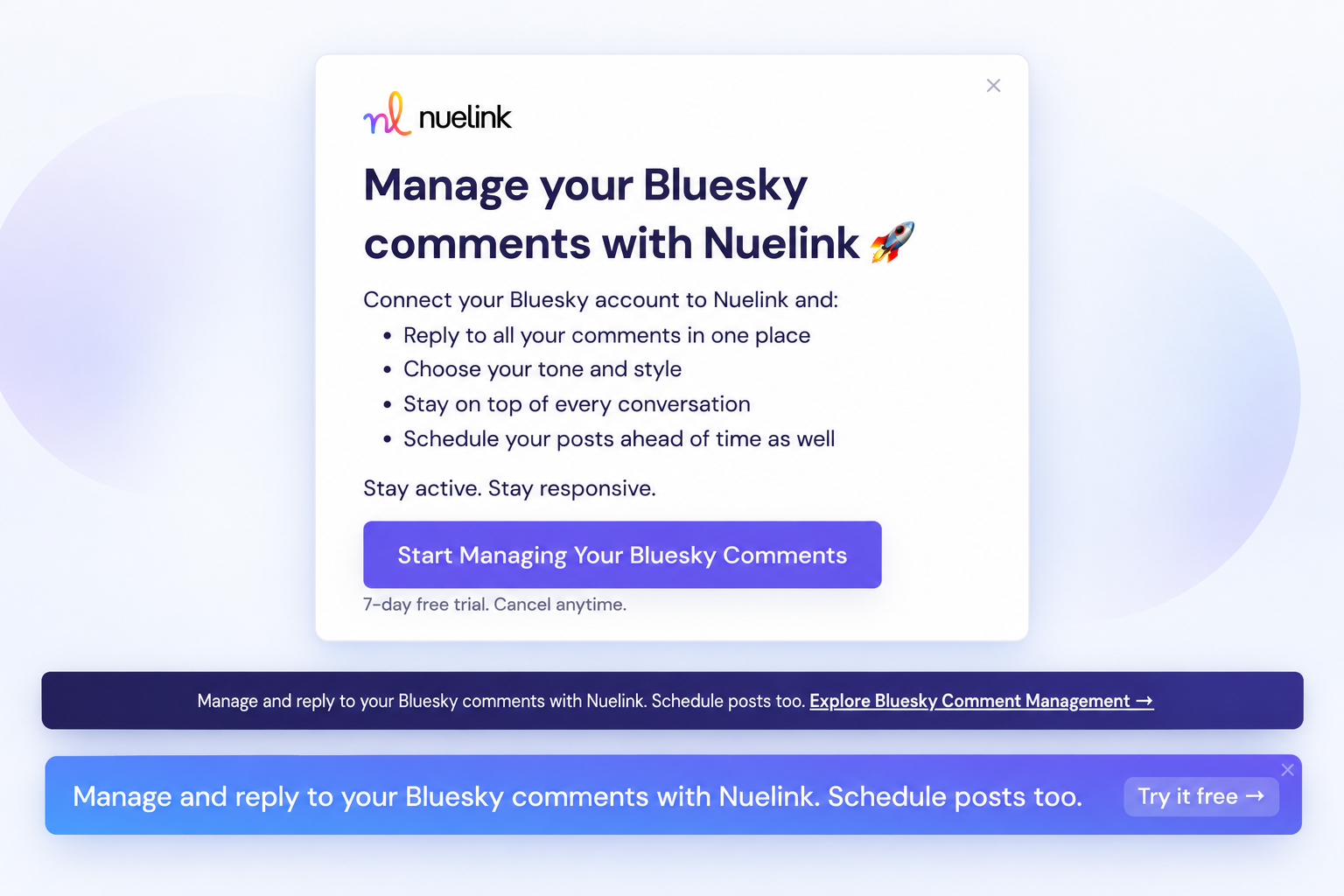
Once the tools were driving meaningful traffic, we moved to building a conversion layer that would turn visitors into Nuelink users. The main focus was on popups, banners, and floating buttons.
Popups were timed and intent-based, designed to introduce Nuelink's product in context. Someone using the Instagram Caption Generator is already thinking about social media content. The popup meets them there and shows them Instagram-related feature that Nuelink has.
Banners were placed in-page, contextually connecting the free tool to the landing pages. They’ve been built to always be present.
Floating buttons provided a persistent CTA that followed the user through the tool experience without blocking it. Always one frictionless step between using the tool and signing up.
Every element was adjusted based on real data from the UTM and PostHog setup. If something wasn't converting, we change it.
Here is an example of the popup, banner, and the floating button we used for the Bluesky Comment Reply Generator free tool.
Tracking What Actually Mattered
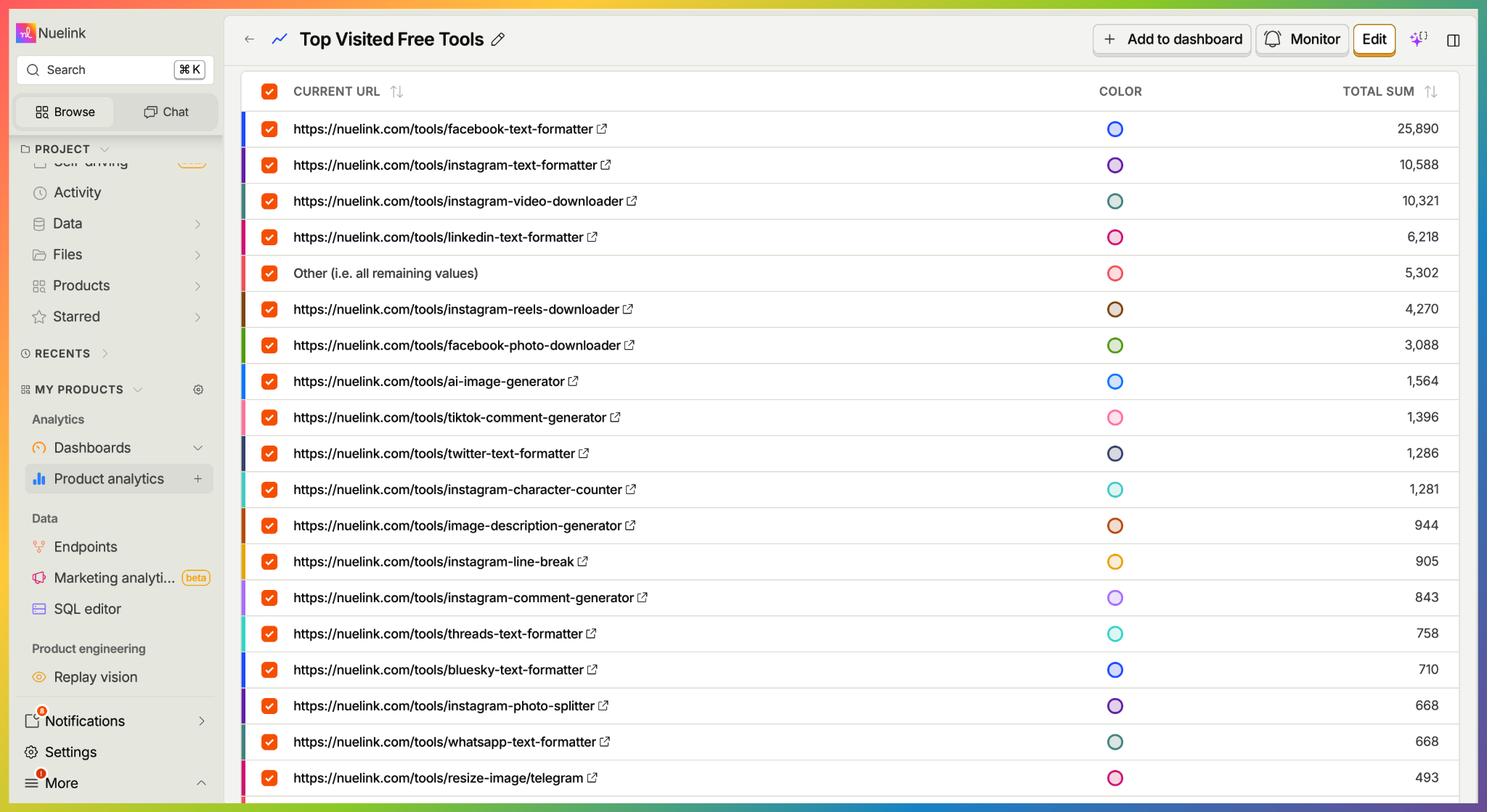
Traffic numbers are easy to report. Google Search Console is doing a great job with it. Signups are harder to attribute, unless you build the infrastructure to do it properly.
Every free tool page was tagged with a UTM structure, tracking the source, medium, and the specific tool a user came from. That data fed directly into PostHog, giving a clear view of which tools were actually converting visitors into Nuelink signups and keep adjusting popups, banners, and floating buttons depending on the current data.
This made the free tools strategy measurable in the way that matters to a business. It also made prioritization easier. If a tool was driving impressions but no signups, that was a signal to look at the conversion layer. If a tool was converting above average, that was a signal to build more like it.
The UTM and PostHog setup turned the entire tools into a trackable acquisition channel.
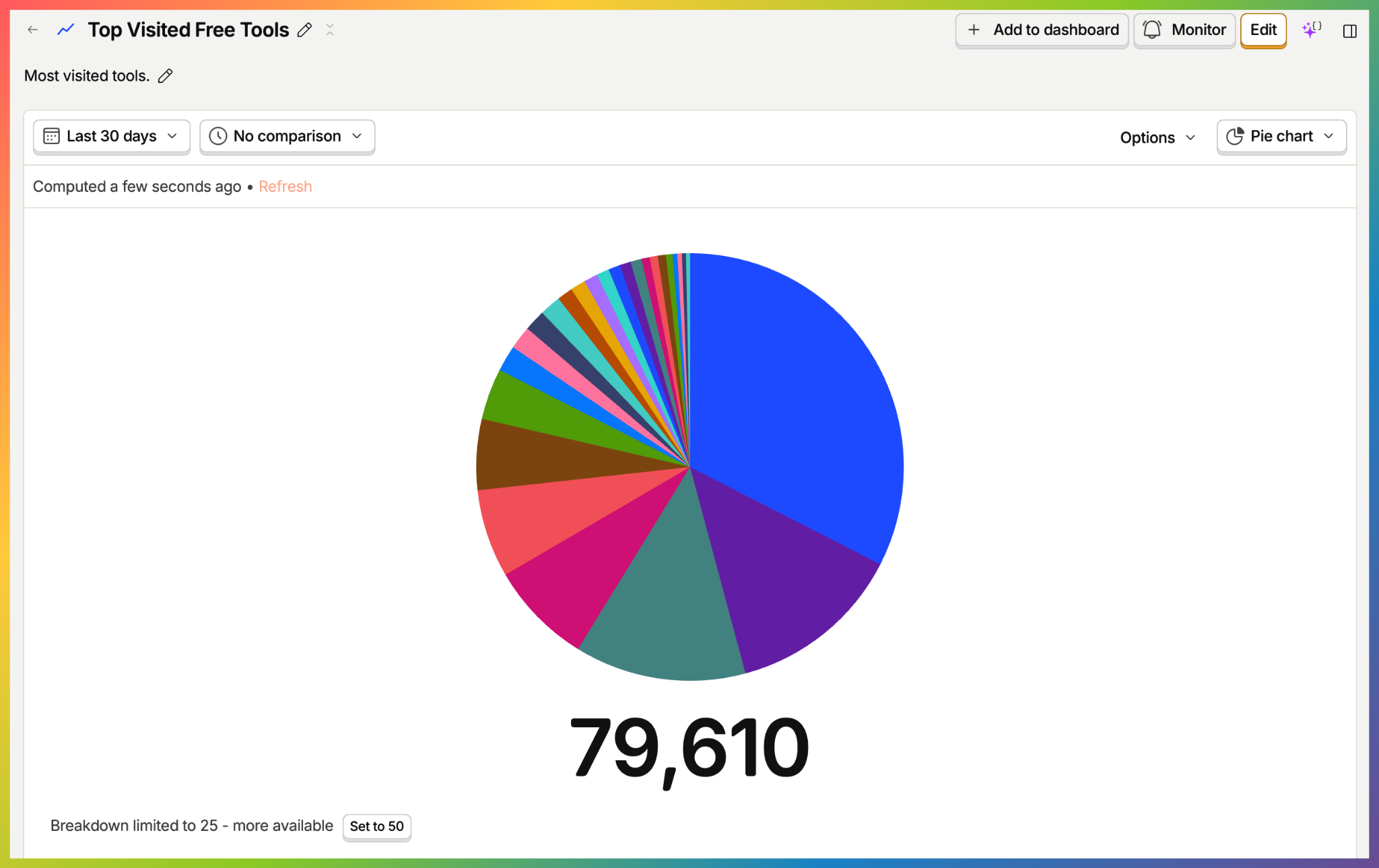
Connecting the Traffic to Paid Retargeting
Nearly a million clicks were coming through the tools pages. Most of those visitors left without signing up.
The opportunity was obvious: connect that audience to a Meta retargeting campaign and give them a reason to come back.
I flagged this to the CEO, who built and ran the campaign directly. The audience was broad, anyone who had visited a tools page, with a discount offer as the hook and existing Nuelink users excluded. It ran for several months and generated a meaningful volume of attributed signups.
The DMCA Incident
Not everything goes smoothly. One of the tools was the YouTube Video Downloader, which went viral almost immediately after launch.
In two days: 1.2 million impressions and 35,500 clicks.
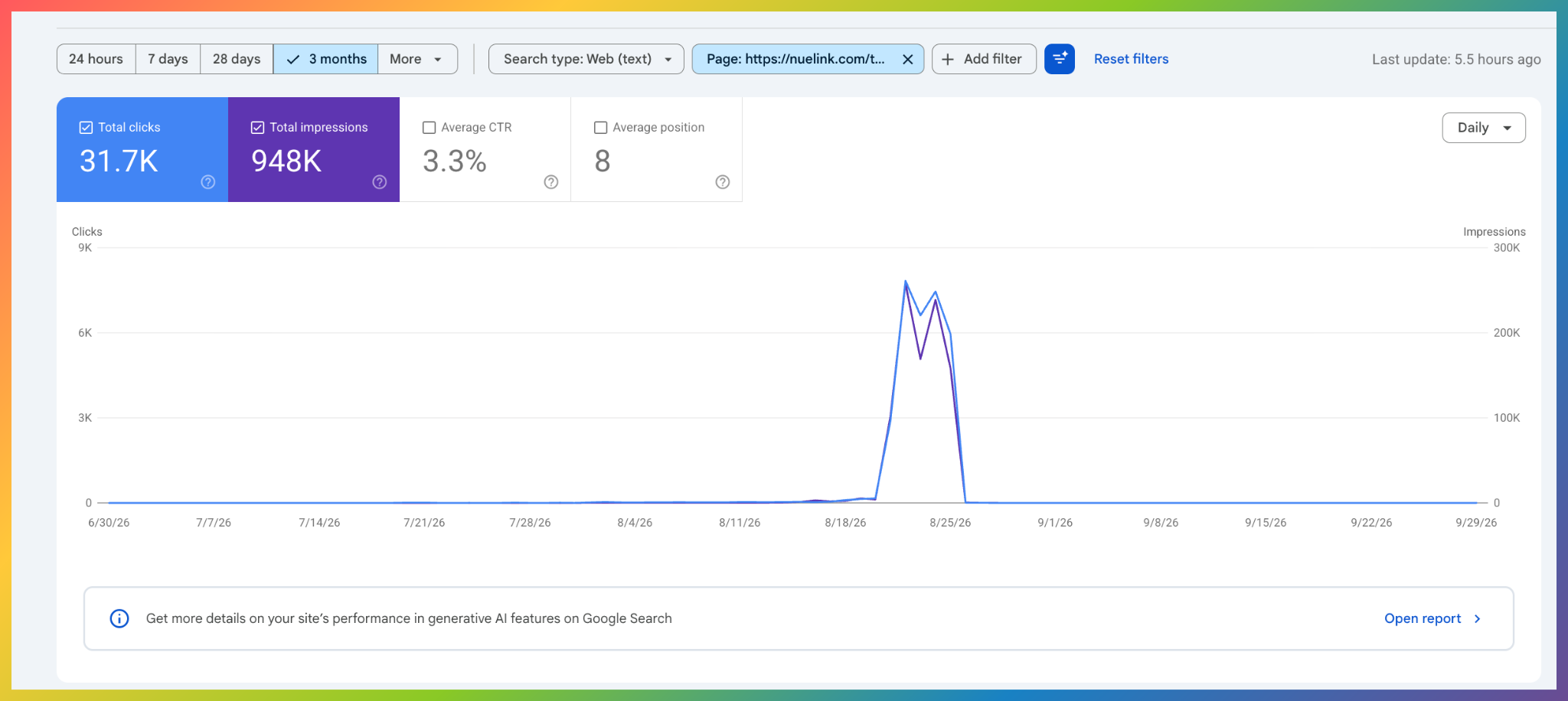
Then came the email. Google Search Console sent a circumvention-related removal notice, citing that tools which download copyrighted content violate applicable laws. The tool was removed the same day and the URL redirected to the Nuelink homepage to preserve any link equity and avoid sending live traffic to a dead page.
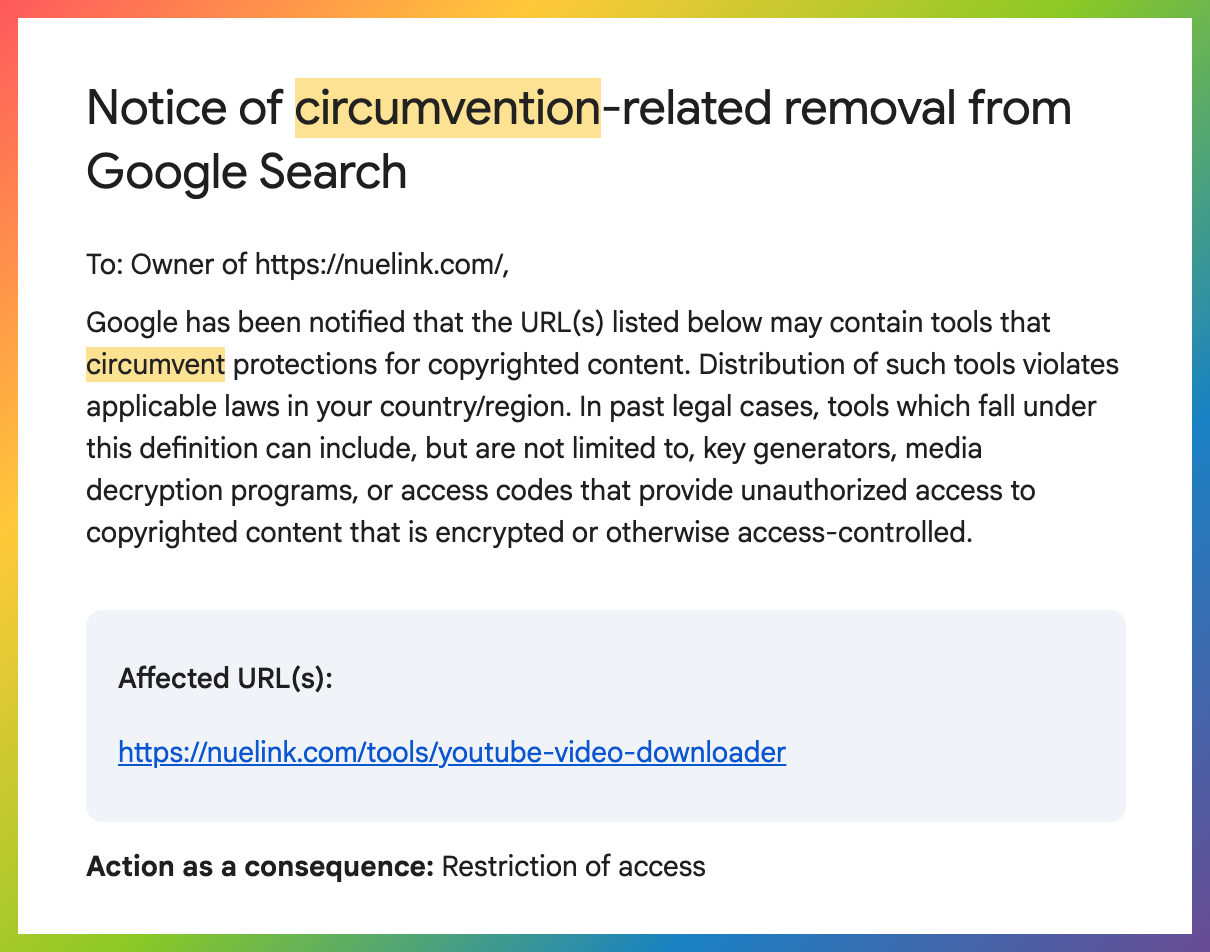
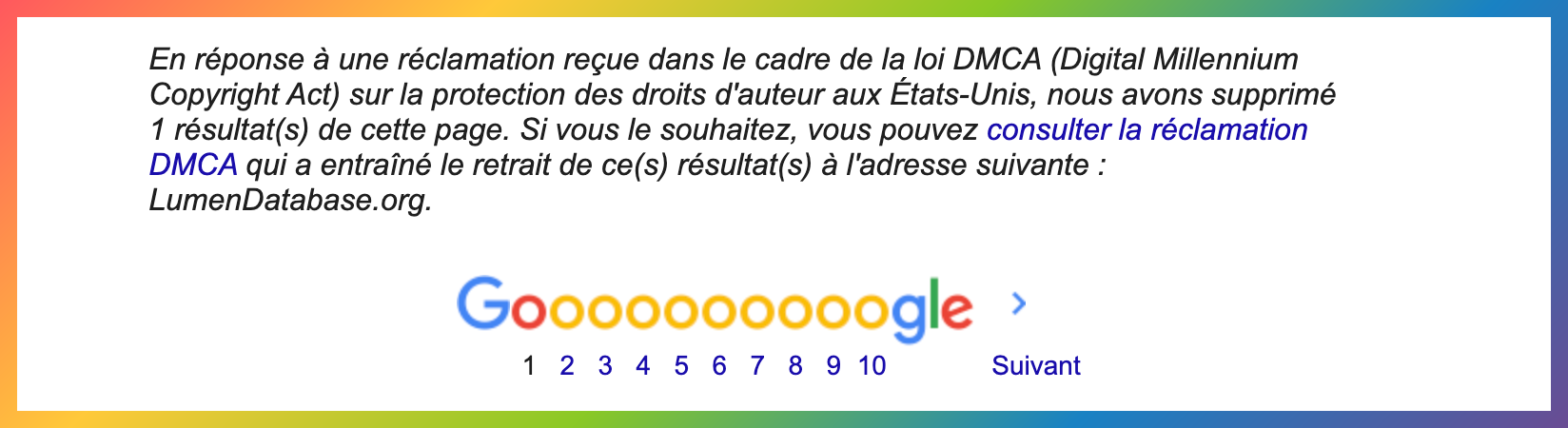
It was a fast decision with a clean execution. No ranking damage to the broader /tools infrastructure.
The rest of the 130+ tools continued performing without interruption.
The lesson: in a system this large, you will eventually build something that sits in a legal grey area. The right move is to act quickly, redirect cleanly, and protect the rest of the system.
Conclusion + Tip.
Free tools work when they are built for your ICP. Every decision here started with the same question: is this something Nuelink's ICP actually uses? That filter kept the free tools focused and made the traffic meaningful. A generic tool directory drives visitors very often will never lead to any signup or real user.