Nuelink · The organic growth story
From 17 daily clicks to $73K in organic revenue.
How I built Nuelink’s SEO from the ground up across content, free tools, link building, technical SEO, and AI visibility.
The story
Starting from scratch
When I joined Nuelink in April 2023, it had no SEO organic presence. No content strategy, no link building, no SEO technical foundation, just a product competing with giants like Buffer, Hootsuite, Later, and others that had years of SEO head start.
The challenge was to build everything at once and from scratch without the luxury of a dedicated SEO team or a budget.
A snapshot of the wins
Built from the ground up.
Generated in revenue attributed to Google organic search during the selected reporting period.
The story
Where We Started
April 2023. I opened Ahrefs for the first time on Nuelink's domain and the numbers were exactly what I expected from a SaaS that hadn't touched SEO yet, and somehow still a little worse.
17 organic clicks per day.
The kind of number that doesn't even register as a baseline. A DR of 9, a handful of blog articles with no clear strategy behind them, and one content creator who was barely active.
No link building, no technical foundation, no keyword research, no content clusters. Nothing.
Meanwhile, the competition wasn't waiting around.
Here's what the starting point looked like in full:
- 17 organic clicks/day, the entire SEO output of the domain
- DR 9, almost no backlink authority, no established publisher relationships
- A few scattered blog posts, no strategy, no clusters, no internal linking
- Zero link building, no outreach, no relationships, no system
- No SEO tools, no Ahrefs plan, no tracking infrastructure
- No SEO direction
- Competing against Buffer, Hootsuite, Later, and Publer, products with years of SEO head start
I was starting from scratch. Completely solo. And the only way out was to build everything at once.
The story
Here's How We Got There
None of these numbers came from luck or a single tactic that went viral.
They came from building five interconnected pillars: content, link building, free tools, technical SEO, and AI visibility.
Each one fed the others.
Here's exactly what I did and how I did it.
The five pillars
01. Content Strategy
Publishing more articles was not enough. Nuelink needed a content system built around how potential customers search, compare tools, and solve daily social media problems. I mapped the market into clusters, prioritized topics by intent and business relevance, and turned scattered publishing into a connected acquisition engine.
- Built keyword clusters around core use cases, integrations, industries, comparisons, and high-intent problems.
- Turned keyword research into clear briefs so every article had a purpose, target query, and next step.
- Connected related pages through internal links so authority and readers could move through each cluster.
The five pillars
02. Free Tools
Content alone would not capture every search opportunity in the market.
People also searched for tools they could use immediately.
I chose tool ideas that matched Nuelink's audience, then worked with the development team to build a scalable library that could rank, serve users, and introduce the product in context.
- Selected tool ideas using competitor research, user requests, search demand, and fit with Nuelink's ideal customer.
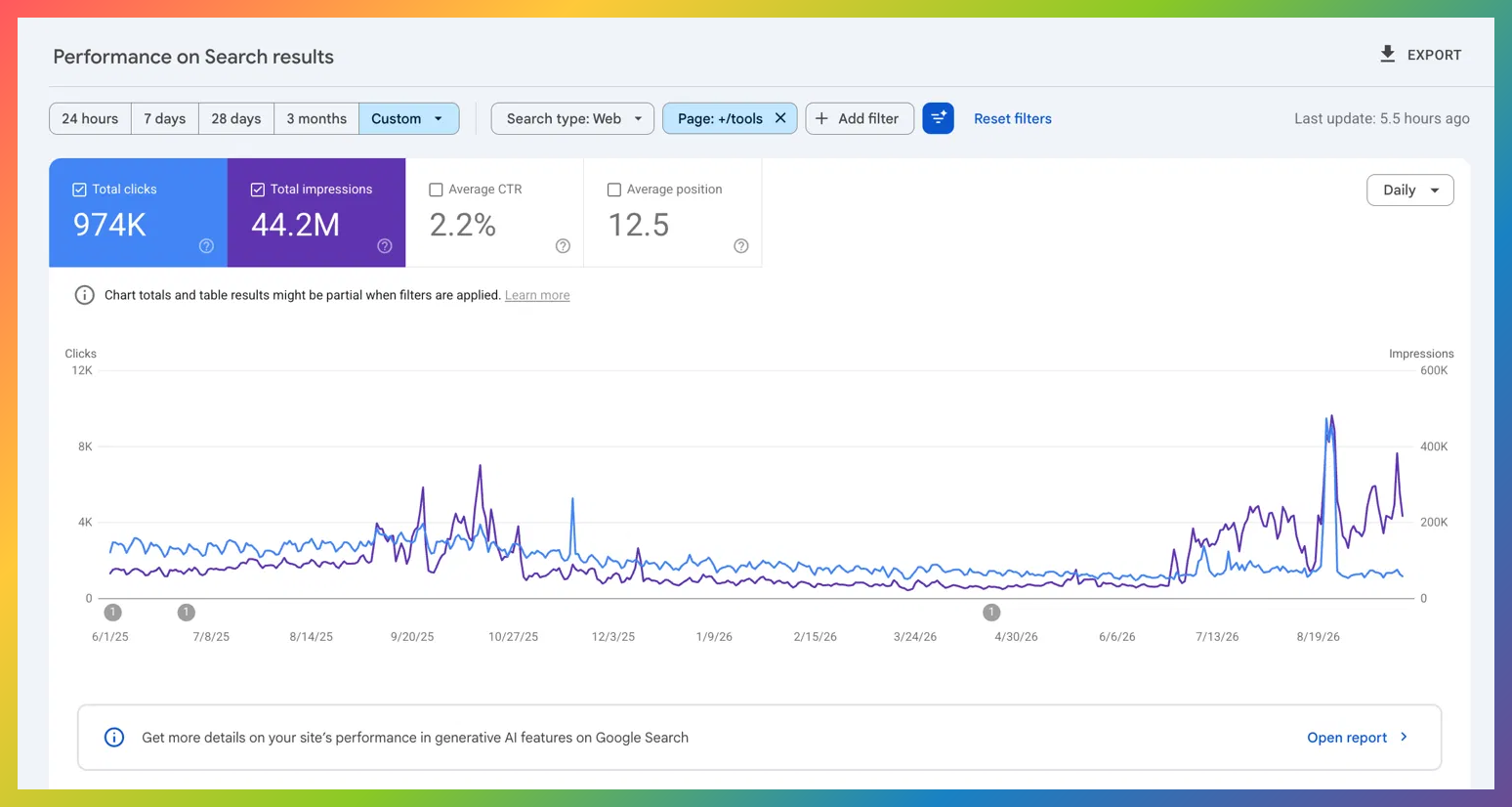
- Expanded reusable tool formats across the social platforms Nuelink supports, growing the library to more than 130 tools.
- Connected the tool pages to monitoring, contextual calls to action, UTM tracking, and PostHog attribution.
The five pillars
03. Link Building
Nuelink could not compete with established SaaS brands while sitting at DR 9. I built three complementary link-building systems, each designed to solve a different authority problem.
Some strategies earned recognition from major platforms in our ecosystem. Others used competitor backlink data to uncover proven opportunities. I also built branded links that strengthened Nuelink as an entity, not just individual landing pages.
No links were purchased. The growth came from relevant placements, useful collaborations, and relationships that created value for both sides.
1. Product Ecosystem Mentions
Some of Nuelink's strongest links came from platforms already connected to how our customers automate their work. I focused on opportunities where Nuelink could be presented as a useful product, integration, or resource within those ecosystems.
- Earned recognition and links from Zapier, Make, and IFTTT.
- Connected Nuelink to trusted automation platforms used by its target audience.
- Prioritized mentions that strengthened both referral visibility and brand credibility.
2. Competitor Link Building
Buffer, Hootsuite, Later, and other competitors already had years of backlink history.
Instead of treating that as an unfair advantage, I used it as a map. I analyzed where competitors were earning links, which pages attracted them, and which publishers were open to featuring social media tools.
- Mapped backlink gaps across Nuelink's main competitors.
- Identified publishers, listicles, comparisons, and resources already linking to similar tools.
- Turned proven competitor opportunities into relevant placements for Nuelink.
3. Branded Link Building
Ranking individual pages was only part of the goal.
Nuelink also needed stronger signals around the brand itself.
I built links using the Nuelink name and directed them toward the homepage and other central brand pages.
- Built direct links around the Nuelink brand name.
- Strengthened the homepage.
The five pillars
04. Technical SEO
Growth would not survive on a weak technical foundation. The biggest test came when Nuelink moved its blog to Astro. A migration could have erased years of rankings in one release, so I treated it as an SEO project first and a platform change second.
- Audited the existing URLs, metadata, canonicals, internal links, and indexable templates before launch.
- Defined redirect and page-parity requirements so valuable URLs kept their search equity.
- Monitored crawling, indexing, rankings, and Search Console signals after launch and fixed issues as they appeared.
The five pillars
05. AI Visibility
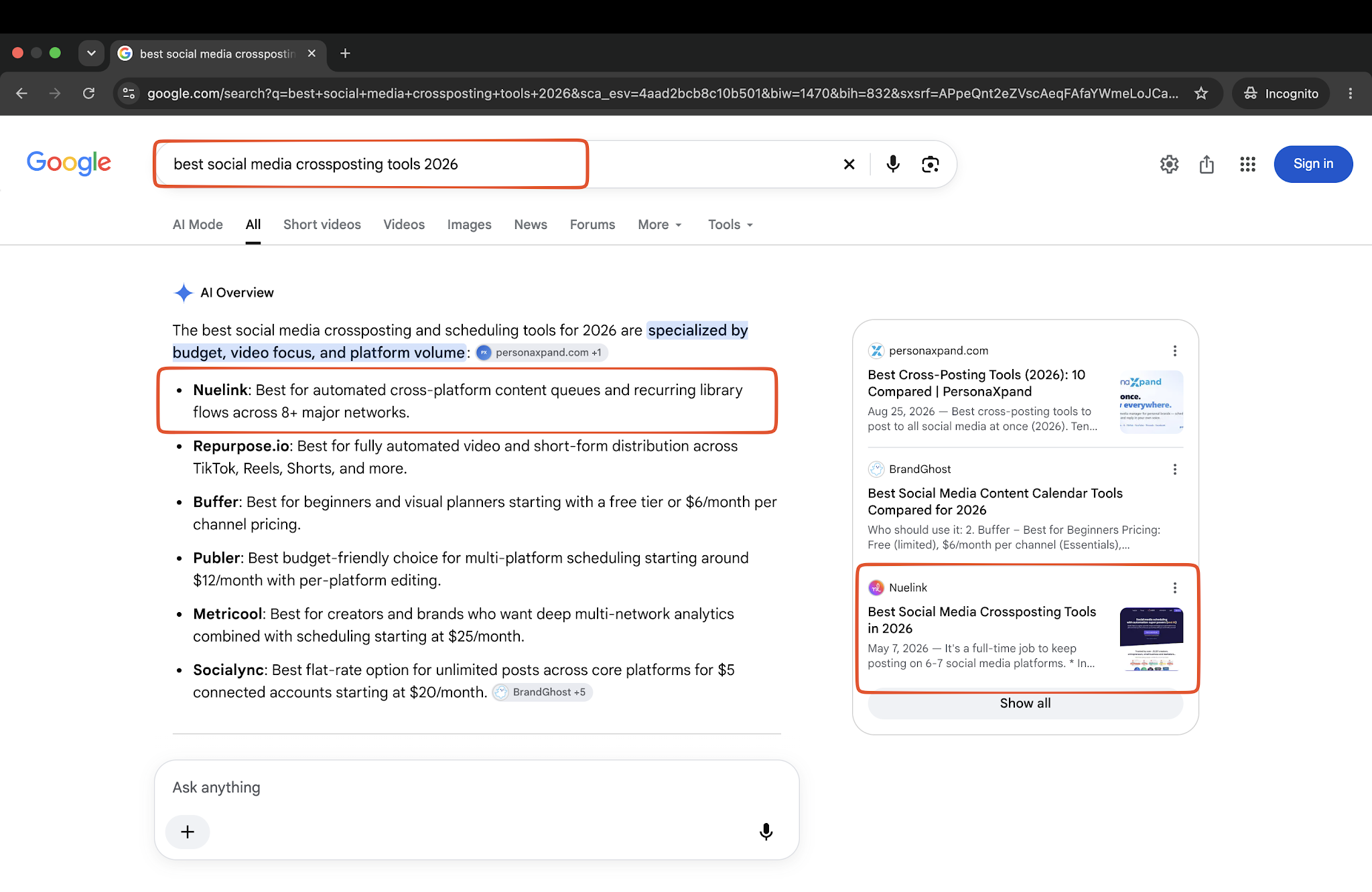
Search was changing while the SEO engine was still growing. Ranking in traditional results was no longer enough. I adapted the content and authority strategy so Nuelink could be understood, trusted, and cited by AI search experiences as well as Google.
- Structured important pages around direct questions, clear answers, and language AI systems could interpret easily.
- Strengthened Nuelink's entity signals through consistent positioning and relevant third-party mentions.
- Tracked AI Overview and AI Mode visibility, then expanded the topics and formats earning citations.
The story
How I Decided What to Work On
Starting from zero created an endless backlog. There was always another keyword to target, technical issue to fix, link opportunity to pursue, or free tool we could build.
I could not treat every opportunity as equally valuable. I prioritized work using four factors: business intent, relevance to Nuelink, ranking potential, and expected impact on signups.
This meant I did not always choose the keyword with the highest search volume. A smaller comparison, alternative, or integration keyword could be far more valuable if the person searching was already evaluating social media tools.
I also prioritized work that strengthened something we had already built. A new article could complete a content cluster. A backlink could support a commercially important page. A free tool could create several related search opportunities instead of one isolated ranking.
The goal was never to maximize output. It was to direct limited time toward the work most likely to compound.
The story
Building SEO Without a Dedicated Team
I was not stepping into an established SEO department. There was no existing content engine, link-building operation, technical roadmap, or reporting system waiting for me.
I owned the SEO function end-to-end. That included keyword research, content planning, briefs, internal linking, link acquisition, technical audits, migration requirements, performance tracking, and conversion analysis.
I still worked closely with Nuelink's content creator, developers, designer, and CEO. My responsibility was to turn SEO into a clear system they could contribute to without needing to make the SEO decisions themselves.
That meant creating repeatable briefs, organized content clusters, link-building trackers, technical checklists, monitoring systems, and clear priorities for development.
Working without a dedicated SEO team forced me to build for leverage. If a process depended on me manually holding every detail in my head, it would eventually become a bottleneck.
The result was an SEO operation that could keep moving across content, links, free tools, technical work, and AI visibility without requiring a large team behind it.
The story
Results
The result I care about most is not traffic. It is signups and real paying users.
Nuelink went from virtually zero customers coming through search to more than 100 organic signups on a normal day. SEO became a daily acquisition channel, not a reporting metric.
The business impact
Revenue from Organic Search
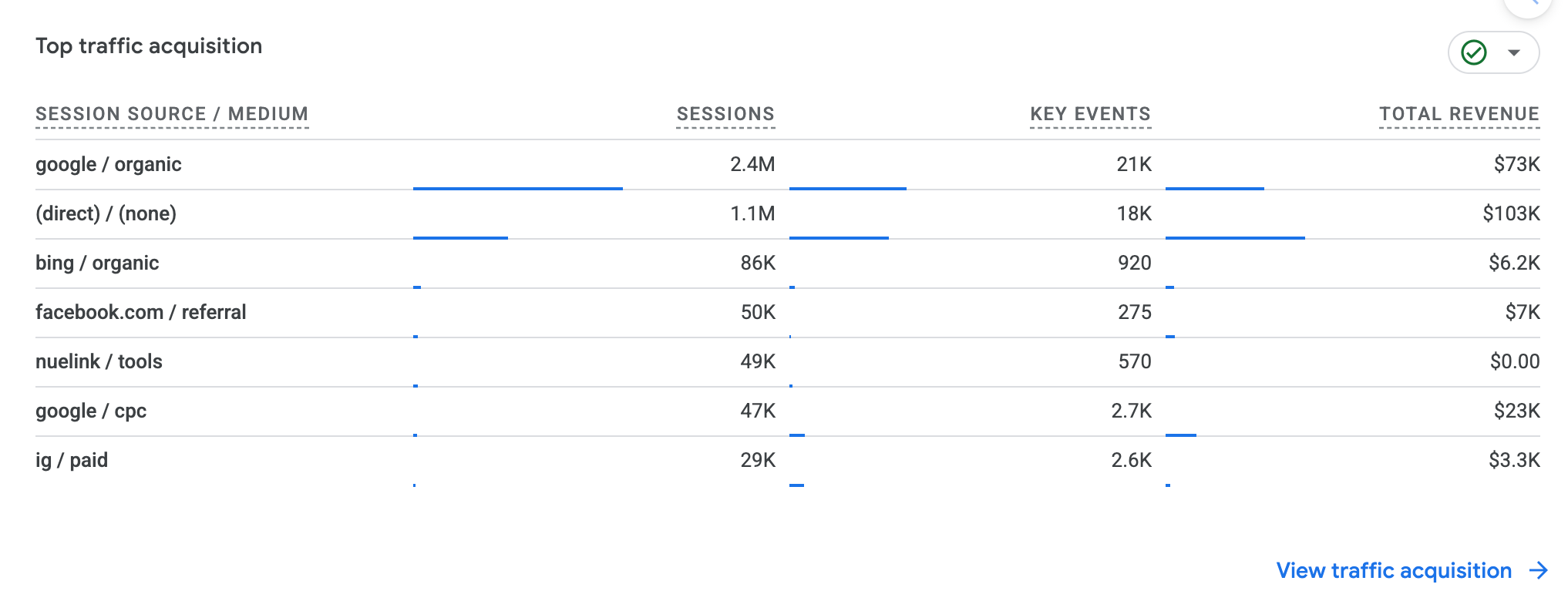
The business impact went beyond traffic and signups. Google Analytics recorded $73K in total revenue attributed to Google organic search for the selected reporting period. This figure covers Google organic search; revenue from Bing and AI-driven discovery is not included in that total.
This gave me a clear business result to show alongside search traffic: people finding Nuelink through Google’s organic results were also becoming paying customers.
- 100+ organic signups per day, up from virtually zero
- ~4,000 organic clicks per day, up from an average of 17
- DR increased from 9 to 63.
- 130+ free tools generated 974,000 clicks and 44.2 million impressions
- Links and recognition from Zapier, Make, IFTTT, and other industry leaders
Revenue reflects the selected reporting period shown in Google Analytics.